
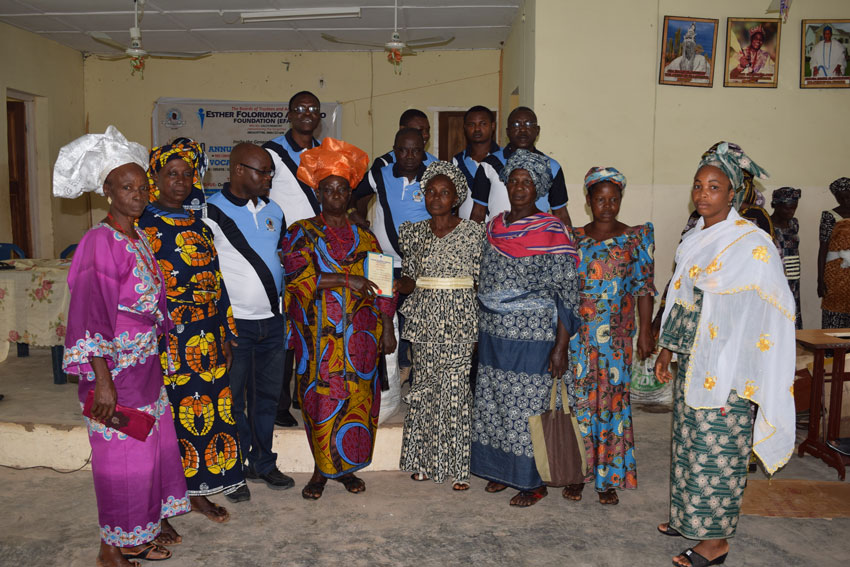
2016 LECTURE: ÌWÀ RERE LÈ̩SÓ̩ ÈNÌYÀN [GOOD CHARACTER IS THE RIGHT ADORNMENT FOR THE BODY]
-
by
efaf
- No Comments on 2016 LECTURE: ÌWÀ RERE LÈ̩SÓ̩ ÈNÌYÀN [GOOD CHARACTER IS THE RIGHT ADORNMENT FOR THE BODY]
Introduction
I give God all the glory for His grace and mercy upon my life, for it is not of him that runneth, nor of him that willeth but it is of God that showeth mercy. I greet the chairman of this occasion and members of the high table. First, let me start by congratulating the Boards of Trustees and Adviser of the Esther Fó̩ló̩runsó̩ Àyántáyò̩ Foundation (EFA-F) on this 6th annual lecture. I also thank the EFA-F foundation for giving me the opportunity to be the guest lecturer of today, my prayer is that the foundation will grow from strength to strength, amen.
The subject of this lecture is “Ìwà Rere Lè̩só̩ Ènìyàn” meaning Good Character is the Right Adornment for the Body. The topic is a Yorùbá proverb. The proverb is an international phenomenon and bearer of philosophical insight. It is also apparent truth reflecting human experiences. The importance of proverbs in society cannot be overlooked because proverbs are vehicles through which the hidden essences of words are conveyed. Although proverbs are universal, they are peculiarly unique to each culture as they are embedded in the traditions and ways of life of people. Proverbs thus becomes an invaluable instrument of transmitting values and norms from one generation to the other. The Yorùbá people valued proverbs very highly because they are deep-rooted in the culture of the people. The topic of this lecture has two key words: Ìwà (character) and È̩só̩ (Adornment). A man’s character can be good or bad but in this lecture our emphasis will be on good character. Adornments are used by women in order to be beautiful. Women can adorn themselves with beautiful apparel, earrings, beads, gold, powder and others. All these adornments without good character are useless. The Bible attests to this in Ipeter 3:3-5 and Proverb 31:30.
Whose adorning let it not be that outward adorning of plaiting the hair, and of wearing of gold, or of putting on of apparel; but let it be the hidden man of the heart, in that which is not corruptible, even the ornament of a meek and quiet spirit, which is in the sight of God of great price. For after this manner in the old time the holy women also, who trusted in God, adorn themselves, being in subjection unto their own husbands. IPeter 3:3-5
Ojú dáradára ní è̩tàn, e̩wà sì jásí asán: s̩ùgbó̩n obìnrin tí ó bè̩rù Olúwa, òun ni kí a fi ìyìn fún.
Favour is deceitful, and beauty is vain, but a woman that feareth the Lord, she shall be praised. Proverb 31:30.
Proverbs
Proverbs is a universal phenomenon which is highly valued from the ancient times to the modern age. Proverbs are a rich source of imagery and succinct expression, encapsulating abstract ideas and allusive wordings, usually in metaphorical forms. As in many parts of the world, the Yorùbá hold proverbs in high esteem because they are regarded as the wisdom lore of the society. Proverbs are considered to be traditional and originated from the observations of natural phenomena and human relations, and old people are regarded as a repository of proverbs. Anyone who cannot apply proverbs effectively among the Yorùbá people is considered to be unwise hence the saying:
Bí òwe bí òwe là ń lùlù ògídìgbo
O̩ló̩gbó̩n ní í jó o, ò̩mò̩ràn ní í mò̩ ó̩n
The war drum is cryptically beaten like a proverb
It is the wise that dance to it, it is the well informed
that recognize it.
Also when a situation seems intractable, the confusion might be resolved by a manipulation of proverbs. Below is an instance:
Òwe le̩sin ò̩rò̩
Bí ò̩rò̩ bá so̩nù
Òwe la f ií wá a
Proverbs are horses on which words ride
When words are lost
It is proverbs we use to search for them (Agbájé:2002:238)
One can therefore deduce form the above the Yorùbá perception of the proverb as an aesthetic device and an agent of vitality for speech.
Character
Character is a combination of qualities in a person or place that makes them different from others. According to Abraham Lincoln: character is like a tree and reputation like its shadow. The shadow is what we think of it, the tree is the real thing. Abímbó̩lá (1975) opines that Ìwà is the essence of being, and that a man’s character is what can be used to characterize his life especially in ethical terms. Rao (2008) defines character as “the inherent complex of attributes that determine a person’s moral and ethical actions and reactions. Some of the characteristics of character are honesty, respect, caring, integrity, responsibilities and citizenship.
The Yorùbá people believe that a woman must add good character to beauty to be able to stay long in her husband’s house. Beauty without good character is detested by the Yorùbá people, and this is fore grounded in the excerpt below:
Ìwà le̩wà
Mórí lo̩ má mé̩wà lo̩
Òòjó̩ le̩wà á bò̩
Orí níí bá ni gbélé o̩ko̩
Ikú e̩wà níí pò̩kín
Ikú ara ríre ní podíde̩
O̩mo̩ dára ó de̩jó̩
O̩mo̩ tí kò sunwò̩n
Ò̩dè̩dè̩ ìyá rè̩ níí pé̩ sí (Akínye̩mí 1989:116)
Character is beauty
Go with character and not beauty
Beauty is a daily affair
Character sustains one in the husband’s house
It is beauty that kills peacock
It is pride that kills the parrot
A child’s beauty becomes an object of litigation
An ugly child
Will remain in her mother’s house for a long time
It is obvious from the above excerpt that there is difference between beauty in character and physical beauty. The wise Yorùbá man or woman will recommend that one should not marry because of physical beauty but because of ethical or behavioural beauty, for the lady may be beautiful in look but with bad character. Whereas if one could find a coalescence of beauty and good character, this would be an invaluable combination to be prized above anything and everything in a human being that is entering into marital relations. But in the absence of this combination, it is better to marry someone who is not so beautiful but who is known to have been properly brought up by his or her parents and who is acknowledged by members of the community to have good character, a well cultured, highly respectful and morally upright person.
In all societies dressing is an area of culture that effort is placed. It is clear that originally, dressing is one of the basic necessities of life either as protection from the elements or as a means of covering one’s nudity (Béwàjí 2003:192). The Yorùbá people believed that “as̩o̩ ńlá kó̩ ni ènìyàn ńlá” meaning that big dress is not enough to make one a big (important) person, there is also the saying that “Ìrínisí n iì so̩ ni ló̩jò̩” meaning that, the way one presents oneself physically is the way one is responded to or treated. The combination of the two shows that while appearance may be deceptive, especially in dressing, the way in which one is attired and the deportment presented may influence the way one is treated and respect or lack of it that one receives in society. The way personal wealth is regarded among the Yorùbá people is worth mentioning. When effort is made to dress properly and present the best foot first, there is the belief that “ènìyàn bo ni lára ju as̩o̩ lo̩” meaning that human beings (relatives) are better protection from the elements and forces out there than clothes. For it is part of the understanding of human relationships that one may be rich and materially well to do, but remains miserable, lonely and dejected without the proper surrounding of family and good society that makes life meaningful. These are important guides to life and they supervene on modes of dresses and moderate the pressure to dress or the desire to be individualistic, acquisitive or egoistic.
The Yorùbá indigenous education, the literary artists and Ifá literary corpus dwell extensively on good character and this will now be examined one after the other.
The Yorùbá People
The Yorùbá people are located in the southwest axis of Nigeria where they contiguously and wholly occupy six of the thirty-six states of Nigeria. The states are: Èkìtì, Lagos, Ògùn, Òǹdó, Ò̩s̩un and Ò̩yó̩ states. They partly occupy three others namely, Edo, Kogí and Kwara states. According to 2006 census, the Yorùbá people number about thirty-million, close to one-fifth of the entire population of the country. The people share similar culture and traditional belief system. They have also accepted the two main world faiths: Christianity and Islam.
Education
In the traditional African society, the education of the child basically focused on the transmission and internalization of the socio-cultural values, it started from the infancy and it was a continuous process till maturity. The curriculum was set in making the children functional citizens that are able to blend with the community. Functionalism and communalism were the underlining principles with the aim of making everybody to work together to promote solidarity and stability of the community they found themselves in. For instance the Yorùbá people of Southwestern Nigeria have various moral and social value meant to regulate interpersonal relationship and to perpetrate the entire community. Awólàlú and Dò̩pámú (2005) point out that the Yorùbá races have certain standards or norms to be observed. These standards or norms are meant for social cohesion and smooth running of the community. They are to prevent members of the community from becoming rebellious and thereby endangering the welfare of the society. In the traditional Yorùbá society, cultural values were held in high esteem and good character was more important than any other thing. A person without good character among the Yorùbá people was as good as dead. Good character is the cornerstone of the Yorùbá value system (Fafunwa 1974, Awólàlú and Alana 2004 and Fáladé 2008). In order to achieve one’s aims in life, one must embrace good character. A person that refuses to exhibit good or gentle character is seen as a brute. The Yorùbá say of such a person: Kìí sènìyàn, ń s̩e ló fawo̩ ènìyàn bora (He is not a human being he merely assumes the skin of a human being). A well-behave person is described as: Ó s̩ènìyàn (he acts the person). He can also be reffered to as O̩mo̩lúàbí (one who behaves as a well-born or a morally upright person, Ìdòwú 1962). The Yorùbá people believe that character emanates from Olódùmarè, therefore deviation from the path of good character is not only an affront to Olódùmarè but also results in the estrangement of man from the Supreme being.
The principles of Yorùbá education are based on the concept of O̩mo̩lúàbí. The end product of traditional education is to make an individual an O̩mo̩lúàbí. To be an O̩mo̩lúàbí is to be of good character in all its ramifications. Good character in the Yorùbá sense, includes respect for old age, loyalty to one’s parents and local traditions, honesty in all public and private dealings and other desireable qualities (Májàsán 1967:2). In essence the main idea of Yorùbá education has always been to foster good character in individual and to make him a useful member of the community. Education in the Yorùbá culture is a life-long process; the whole society is the school. The traditional education in Yorùbáland begins in the womb. Once pregnancy is effected the society conscious of its responsibility, starts to give guidance on what the pregnant woman would eat and so on. All these are precautions so that nothing adverse affects the child. As the child is born and develops, all efforts are made to give him an opportunity for all round development. Parts of his body are stretched when is being bathed and he is also thrown up many times to develop his courage early. The mother-child relationship becomes a source of training. The child is loved and cuddled.
From infancy a child in Yorùbá society is taught to observe his environment, to know the names of plants, trees, birds, animals and others. It is in character building that Yorùbá education is manifested in its entirety. A combination of methods is therefore employed to mould the individual into a good person. The whole society is the school and the individual is guided by the unwritten norms of the society. Morality is lived. Courage is demonstrated. Endurance is exhibited. From childhood, the child is taught by examples as well as through proverbs, folktales, myths, songs, about the virtues of the society.
Truthfulness is referred in Yorùbá education and the truthfulness is meant to be practiced in both private and public lives. Stories of the consequences of lying are told to the child so that he could be guided thereby. Also appropriate proverbs are sung to the ears of the child, motivating him through his sub-conscious mind onto the values and problems of truthfulness.
Iró̩ pípa kì í wí pé ká má lówó ló̩wó̩
Ilè̩ dídà kì í wí pé ká má dàgbà
S̩ùgbó̩n o̩jó̩ àtisùn le̩bo̩
Lying does not mean that one should not be rich
Treachery does not mean you may not live to old age
But it is the day of death about which one should be baffled
The virtue of hardworking is also extol.
(i) Ìs̩é̩ kò gbe̩kún
Ebi jàre ò̩le̩
Weeping is not the answer to poverty
A lazy man who is hungry has no one to blame but himself
(ii) Agbójú lógún fi ara rè̩ fós̩ì ta
Those who rest assured on the inheritance of their parents
May succumb to poverty consequently (Awóníyì 1973:379)
A child in Yorùbá society is also taught to acknowledge all precedents and all higher authorities before any undertaking. By so doing, the link between the past and the present is maintained. Yorùbá education is integrative. Individual and the society is involved. Through it the individual learns to pursue his own objectives as a means to further societal interests. The introduction of western education makes some people feel superior to others especially those who do not have western education are regarded as inferior and this led to individualism against communalism because classes and statuses emerged. Individuals therefore started looking at how to succeed alone without taking into consideration the larger society.
The Literary Artist
Literary artist is a watchdog of the society be it modern or traditional poet, dramatist or novelist (Olújìnmí 2008:176). As observed by O̩látúnjí, a great artist is fearless commentator on social and political developments and tendencies in his society (1974:7). According to O̩lájubù (1987:6), the literary artist is a motivator, activator, teacher, preacher and entertainer. Also, he is the repository of the collective wisdom and the social, cultural, economic, moral and ethical norms of the society. The literary artists therefore play a multifarious role in the society, viewing the society from different perspectives with various lenses. In their capacity as the store of the invisible stock of values and as instruments for the instruction and training of generations of youths, the Yorùbá literary artists through their works have been commenting on the importance of good character or being morally upright in the society.
The importance of good character is illustrated in the poems of O̩dúnjo̩’s Àkójo̩pò̩ Ewì Aládùn, Adélékè’s As̩o̩ Ìgbà and Adéjùmò̩’s Rò óo re.
O̩dúnjo̩ reiterates the importance of good character in the poem “Tó̩jú Ìwà Re̩”
Tó̩jú ìwà re̩, ò̩ré̩ mi
O̩lá a máa sí lo̩ ní’lé e̩ni
E̩wà a sì máa sí lára ènìyàn
Olówó òní lè dolòsì b’ó dò̩la
Òkun lo̩lá, òkun nìgbì o̩rò̩
Gbogbo wo̩n ló ń sí lo̩ ní’lé e̩ni
S̩ùgbó̩n ìwà ló ń bá ni dé sàárè
Tó̩jú ìwà re̩ ò̩ré̩ mi
Ìwà kò sí è̩kó̩ dègbé
Gbogbo ayé l’ó ń fé̩ni ire l’ára
My friend be of good character
Wealth can move away from one’s house
Beauty also fades away from people
A wealthy man today may be poor tomorrow
Wealth is ocean, riches is ocean
All of them can move away from one’s house
But character follows one to the grave
My friend be of good character
Education is useless without good character
Everybody wants to be related to a good person
From the above excerpt, O̩dúnjo̩ makes it clear that good character surpasses wealth and riches and also that a good person is appreciated by the people and everybody want to be associated with a person with good character.
Adélékè in his poems È̩lè̩ Òsíè̩lè̩ and Sisí Akadá beseech the female students to be of good character and stop selling their bodies to male for cash, because the consequences of their action can be grevious.
Pè̩lé̩ o sisí akadá
Às̩è̩s̩è̩ jánà agódóńgbó
Ólóun ó s̩e jùyá òun
Gàlègàlè re̩ yìí kò a pò̩jù
Láì pó̩dún kan
O ti pààrò̩ ako̩ tó mé̩wàá
Bó o bá fé̩ to̩gbà tí kò tó
S̩ebí gbooro lo̩pó̩n súnkàn
Bó o ti ń fé̩lé̩sè̩
Lo ń fáláyó̩ké̩lé̩
O wá so̩ra re̩ di kè̩ké̩ ìnáròbó
Èyí tí to̩mo̩dé tàgbà ń gùn…
A kì í mús̩é̩ je̩
Ká múyà je̩
Sisí akadá
Ìwé kíkà lodu
Hello female students
You are just starting
You said you will surpass your mother
You are going beyond your boundary
Not up to a year
You have changed up to ten males
When you befriend those on campus and you are not satisfied
Then you moved to the town
As you befriend those without cars
So you befriend car owners
You’ve turned yourself to a cyclic
That is mounted by young and old
You cannot forgo work
And also forgo poverty
Female students
Reading is the only way out
The poet Adélékè detest the kind of life that the female students are living on campus. Most ladies always want to dress to impress in order to get the attention of the opposite sex. Whenever a lady cannot afford the kind of extravagant life she wants to live, she resort to having affair with different men so that she can have money. Adélékè condemns this shameful act and ask the female students to embrace good character and be studious so as to come out in flying colours.
Adéjùmò̩ in the poems Ta lò̩dàlè̩ and Ègún Àbépè condemn totally the way some men used and abused their partner or break up the relationship and for no apparent reason leaving the person that is still in love feeling heartbroken. Below is an excerpt from the poem Ègún Àbépè:
Ò̩pò̩ ako̩ lóde ilè̩ yìí
Ló ti gbàgbé ìfé̩ àárò̩
Wó̩n gbàgbé ìfé̩ àárò̩ tán
Wó̩n fe̩s̩è̩ fe̩ nítorí atibímo̩
O̩mo̩ ò̩hún, o̩mo̩ bíbí inú wo̩n ni o
Kí ni ká ti wí?
Só̩ko̩ táya rá nílé è̩kó̩
Tó kàwé gboyè ìmò̩ ìjìnlè̩ tán
Tó tún fo̩dún mé̩fà jókòó kalè̩ láìnís̩é̩
Tí gbogbo bùkátà ilé wá di wò̩ ló̩rùn aya
S̩érú o̩ko̩ ò̩hún ní wáá rís̩é̩ tán
Tíí jáyàwó só̩ló̩pó̩n…
A jé̩ pé s̩e le̩ níkà nínú
Bé̩è̩ ìwà ìkà kò sunwò̩n
È̩ bá lo̩ be̩rí yín o
Nítorí tepo tiyò̩ yóó bèèrè
Many husbands in this present time
Have forgotten their first love
Having forgotten the early love
They took to their heels because of children
These children, they are their biological children
What do we say?
Husband that the wife sent to school
After getting his degree
He stayed at home for six years without job
The wife then becomes the breadwinner
Is that the kind of husband that will now secure a job
And abandons his wife
That means you are wicked
And wickedness is not good
You better turn a new leaf
Definitely there is going to be retribution
What happened in the excerpt above are implication of bad character. Adéjùmò̩ therefore advocates for sincerity, commitment and good character among couples so as to bring down the number of broken home and single parenthood in contemporary society.
O̩dúnjo̩ in his drama text “Agbàló̩wó̩mérìí Baálè̩ Jòǹtolo” detests bad character and extol good character. Asooremásìkà a poor but honest man suffer a lot for his honesty but due to his perseverance and consistency in doing good, he become the baálè̩ of Jòǹtolo. In the same vein the wicked baálè̩ Àgbàkànmí pays dearly for his wicked acts. The good acts of Asooremásìkà is worthy of emulation for the young and old in the society.
In the contemporary society, promiscuity is a menace that has eaten deep into the society fabrics and this is what Àkàngbé condemns in his drama text Èèpà Ń Para Rè̩. In the text Bó̩sè̩ helps her husband, Dò̩tun through his higher education, denying herself and the kids of so many things. Instead of Dò̩tun to appreciate his wife for seeing him through his university education, he engages in extra-marital affair with his student, Déo̩lá. He spends recklessly on her and later when Déo̩lá tells Dò̩tun off, he ends up in disgrace, and his wife and children leave him. The dramatist uses the text to warn couple to remain committed to each other and it also serve as check and balances for the proper ordering of the society.
Thomas moral tone in Ìtàn Èmi Sè̩gilo̩lá E̩lé̩yinjú E̩gé̩ E̩lé̩gbè̩rún O̩ko̩ Láyé is direct and trenchant. The novel is a condemnation of sexual levity and obsession. Sè̩gilo̩lá is ruined by sexual incontinence. It is the cause of the bitter disgrace of her bridal night that is responsible for her mother’s untimely death. Thomas clearly portrays prostitution as a significant cause of woe and destruction. He decries it as a source of broken homes and broken lives. He therefore calls for sexual chastity. The novelist Fágúnwà in his five novels provide entertainment and discuss classical ethical issues for young and old to reflect on and learn from the experiences of the characters in them. The various escapades and travails of the hunters are replicate of human experiences. Through the novels, Fágúnwà has given his readers vivid understanding of why life must be lived with the best thoughts, actions and expectations and relationships with other persons.
Ifá Literary Corpus
Ifá literary corpus is an important source of information about the Yorùbá value and belief system. According to the Yorùbá people ìwà is one of the very aims of human existence. Every individual must strive to have good character in order to lead a good life in a belief system dominated by many supernatural powers and a social structure controlled by a hierarchy of authorities. In Ifá literary corpus, ìwà is regarded as a woman. In ogbè Alárá, one of the minor odù-ifá, says that ìwà was a woman of exceeding beauty whom Ò̩rúnmìlà married after he had divorced several of the divinities. Despite her beauty, she lacks good character. She had bad habits and an unruly tongue. She was also a lazy woman who always shirked her responsibilities. When Ò̩rúnmìlà could no longer tolerate ìwà bad habit, he sent her packing. Not long after ìwà left Ò̩rúnmìlà’s house, he lost the respect of his neighbours, all his clients deserted him, his divination practice was no longer profitable and he was despised by the community. Ò̩rúnmìlà then discovered that he could hardly live without ìwà. On his search for ìwà, he visited the homes of all the sixteen important chiefs of the Ifá cult but to no avail. Ò̩rúnmìlà sang thus:
O̩gbó̩n inú, awo Alárá
Dífá fún Alárá
Èjì ò̩sá
O̩mo̩ amúrin kan dó̩gbò̩n agogo
Ìmò̩ràn awo Ajerò
Dífá fún Ajerò
O̩mo̩ ògbójú kò̩ò̩rò̩ jà jálè̩
Níbo lo gbé ríwà fún un o
Ìwa, ìwà là ń wá o, ìwà
Ó ní bó o lówó
Tó ò níwà
Owó olówó ni
Ìwà, ìwà là ń wá o, ìwà
O̩mo̩ la bí
Tá à níwà
O̩mo̩ o̩lo̩mo̩ ni
Ìwà, ìwà là ń wá o, ìwà
Bá a níle
Tá à níwà
Ilé onílé ni
Ìwà, ìwà là ń wá o, ìwà
Bá a lás̩o̩
Tá a níwà
As̩o̩ alás̩o̩ ni
Ìwà, ìwà là ń wá o, ìwà
Ire gbogbo tá a ní
Tá à níwà
Ire oníre ni
Ìwà, ìwà là ń wá o, ìwà (Abímbó̩lá 1975:396)
Wisdom of the mind, Ifá priest of Alárá house
Performed Ifá divination for Alárá
Offspring of those who use one iron to make thirty gongs
Great understanding, Ifá priest of Ajerò
Performed Ifá divination for Ajerò
Offspring of the brave man who refused entirely to engage in a fight
Where did you see ìwà, tell me ìwà, ìwà is the one I am looking for
If you have money, but lacks good character
The money belongs to someone else
Ìwà, ìwà, is the one we are searching for
If one have children
But if one lacks good character
The children belong to someone else
Ìwà, ìwà is the one we are searching for
If one has a house
But if one lacks good character
The house belongs to someone else
Ìwà, ìwà is what we are searching for
If one have clothes
But if one lacks good character
The clothes belongs to someone else
Ìwà, ìwà is what we are searching for
All the good things of life which a man has,
If he lacks good character
They belong to someone else
Ìwà, ìwà is what we are searching for
Ò̩rúnmìlà later found ìwà in Olójo’s house where he forcefully took ìwà away.
It is worthy of note that the symbol of good character is a woman. In Yorùbá folklore, women represent the two opposite poles of emotional involvement. Women are the symbol of love, care, emotion, tenderness and beauty. Also, they are symbol of wickedness, callousness, deceit and disloyalty. We can deduce from the above story that:
· Every individual must be patient with people and learn to tolerate them in order to have good character. If Ò̩rúnmìlà had learnt to be patient, he would not have lost ìwà, his wife
· Atimes wife can be a burden to her husband, in the same vein, good character can be a
burden to the just and faithful but they must never shirk the responsibility
· Women do have their negative trait but without them the human society cannot survive. Likewise, good character may be difficult to have as an attribute, but without people who
have it, the world will be a very difficult place to live in.
· Ìwà was a woman who lacked good character and who indulged herself in dirty habits. what we can infer from this is that whoever aspire to have good character must be prepared to harbor indecent thing.
· Whoever aspires to have good character should know that he will sometimes find himself in unpleasant situations which will offend his sense of dignity and decency. But he must not disengage himself from the path of good character lest he loses the very essence and value of his life.
· Ifá rates ìwà above all other valuable things like money, children, clothes, houses that man always aspire to have
· Olódùmarè is the embodiment of good character, He therefore expects human beings to have good character.
· The Yorùbá concept of existence transcends the time when the individual’s is on earth. Therefore it is important to be someone of good character so that one may leave good memories behind.
According to Ìdòwú (1962:155) good character is the major sources of happiness destiny, the good life and the life of fulfillment as the odù ifá corpus demonstrates. In odù corpus according to Ogbè-gúndá, we see how Ò̩rúnmìlà married Ìwà and became very successful:
E̩ wá wo̩mo̩ ìwà be̩re̩re̩ o
E̩ wá wo̩mo̩ ìwà be̩re̩re̩
Ìwà gbé dání
Ìwà pò̩n sé̩yìn
E̩ wá wo̩mo̩ ìwà be̩re̩re̩ (oyèshílè̩ 2007:89)
Come and behold countless children of Ìwà
Come and behold countless children of Ìwà
Ìwà carries children in her arms
Ìwà carries children on her back
Come and behold the countless children of Ìwà
Also Ìre̩tè̩-Ìdí asserts that, good character enables one to journey through life:
Ìwà pè̩lé̩ l’okùn ayé
F ií ró̩ pè̩tì ló̩wó̩ e̩ni
Ò díá fún Ò̩rúnmìlà
Tí ó ń lo̩ fi ìwà pè̩lé̩
Gba okùn ayé ló̩wó̩ ò̩kànlénú irúnmalè̩
It is good character that enables rope of life
to stay unbroken in one’s hand
Performed Ifá divination for Ò̩rúnmìlà
Who through good character
Was going to win the rope of life from
Four hundred and one divinities
The Yorùbá people believed that lack of good character can lead to endless fear and uncoordinated life as established by Ò̩wò̩nrín-sedin:
E̩ jo rè̩, e̩ jé̩ ó sá
Ìwà wo̩n ní máa lé wo̩n kiri
Adíá fún Aníwoníkùn
Tí yóò máa bè̩rù t’ò̩sán t’oru
O jé̩ hù’wà re
O jé̩ hù’wà àtàtà
Aníwoníkùn, kí o yé sá kiri bí ojo
Leave him alone, let him run
It is their character that chases them about
Performed ifá divination for Aníwoníkùn
Who fears incessantly day and night
You better imbibed good character
You better imbibed good character
Aníwoníkùn and stop running helter skelter like coward
Conclusion
In the traditional Nigerian society, cultural values were held in high esteem and good character was more important than any other thing. The characteristics of good character which are honesty, trustworthiness, respect, caring, courage, responsibility, fairness, citizenship and others are missing in the society today thereby undermining the Yorùbá saying that “Ìwà rere lè̩só̩ ènìyàn” meaning good character is the adornment of people. Before the introduction of western education in Nigeria, there existed a traditional education that had functionalism and moral uprightness. However western education and Information and Communication Technology (ICT) spelt doom to some useful cultural elements that could enhance the survival and continuity of the useful cultural elements. It is obvious that Nigeria as a nation is ripe for value overhaul through value added educational policies and value re-orientation for her citizens. The prevalent moral decadence has undermined the cardinal aims of traditional education in Nigeria without which it may be difficult for her to survive as a nation. There is the need to look at the Yorùbá concept of “O̩mo̩lúàbí” and what it stands for. To achieve this, moral education should be made compulsory in the educational policy and should be taught at all levels. The level of corruption in Nigeria is partly due to lack of proper moral education and misconstrued idea that you can always get away with it if you are highly connected. The value-added education would eliminate this mindset. There is therefore an urgent need for value-re-orientation because of their far reaching impact on national developments through citizenship education.
There is need for re-examination of our cultural values in the context of a modern society. An organized control of the media is pertinent for transmission of desires values. The family institution which is the offshoot of the society must re-awake to its moral and social responsibilities of inculcating basic elements of behavioral skills, attitudes and knowledge of our cultural heritage. There must be a repositioning of Nigeria as a nation through appropriate means of interaction, information dissemination, cultural activities, literary works, television programmes, conferences, seminars and workshops. Also, effort must be made to curb the excesses of foreign influences over our adolescent and young adults that invade society through the electronic media and Information Communication Technology (ICT) most especially the internet. By so doing, we are promoting the traditional norms of integrity, morality, hard work and transparency.
Also for Nigerians to enjoy cordial interpersonal and international relations we have to exercise patience. The Yorùbá people believed that one cannot achieve anything without patience, which is one of the characteristics of one with good character. It would have been difficult to achieve any social control in human organizations if no one exercises patience. The various challenges facing Nigeria, ethnic and religious violence, terrorism, kidnapping, rape, political nudging, corruption, indifference to duty, disrespect for the rule of law, bullying and other social vices are due to impatience and the urge to make it fast.
Character is power, it makes friends, draws patronage and open the way to wealth honour and happiness. Presently Nigeria as a nation is not relevant morally in the committee of nations; therefore, there is dire need for us to revive the positive moral norms like good neighbourliness, loyalty among friends, selflessness, patriotism, truthfulness and cooperation. This is important because like Yorùbá proverb attest: “O̩mo̩dé gbó̩n àgbà gbó̩n la fi dá ilè̩ Ifè̩” No man is an Island and also Igi kan kò lè dá igbó s̩e (a tree cannot make a forest). The Yorùbá people believed that no man can live in isolation; therefore it is pertinent for all and sundry to be ready to sacrifice and suppress personal interest for the good of all. There is need for interdependence, everybody must be alive to their responsibilities and work together to ensure the good of Nigeria as a nation since this is the only way individual’s well-being can be ensured and for Nigeria as a nation to be vibrant again.
References
Abímbó̩lá, Wándé (1975) Ìwàpè̩lé̩: The Concept of Good Character in Ifá Literary Corpus in W.
Abímbó̩lá (ed) Yorùbá Oral Tradition. Ìbàdàn: Ìbàdàn University Press.
Adéjùmò̩, A.G (2007) Rò óo re. Ìbàdàn: DB Martoy Books.
Adélékè, D.A (1995) As̩o̩ Igbà. Abé̩òkúta: Visual Resources Publishers.
Agbájé, J.B (2002) Proverbs: A Strategy for Resolving Conflict in Yorùbá Society. Journal of
African Cultural Studies. Vol 15, No 2.
Àkàngbé, A (2011) Èèpá Ń Para Rè̩. Ìbàdàn: Clemeve Media Konsult.
Akínye̩mí, T (1989) Àkòónú Ewì Àpilè̩ko̩ O̩basá. Sé̩mínà ní Ìrántí J.S.A O̩dunjinrin. Òde-Ré̩mo̩.
O̩dunjinrin Publishers Company Ltd.
Awólàlú, J.O and Dò̩pámú, P.A (2005) West Africa Traditional Religion (Revised Edition)
Ìbàdàn: Macmillan Nigeria Publisher Limited.
Awóníyì, T.A (1973) The Role and Status of Yorùbá Language in the Formal School System of
Western Nigeria 1846-1971. Unpublished Ph.D Thesis, University of Ìbàdàn.
Béwàjí, J.A.I (2003) Beauty and Culture: Perspectives in Black Aesthetics. An Introduction to
African and Africa Diaspora Philosophy of Art. Ìbàdàn: Spectrum Books Limited.
Dò̩pámú, P.A and Alana, E.O (2004) Ethical Systems. Understanding Yorùbá Life and Culture.
Nike S. et al. African World Press Inc. 155-170.
Fafunwa, A.B (1974) History of Education in Nigeria. London: George Allen and Unwin.
Fágúnwà, D.O (1938) Ògbójú O̩de̩ Nínú Igbó Irúnmalè̩. England: CMS. Martoy Books
Fáladé, D.A (2008) Indigenous Values and Character Training Among the Yorùbá of Nigeria.
Paper presented at the 1st National Conference of the Nigerian Cultural Studies Network,
Adéye̩mí College of Education, Ondo.
Ìdòwú, E.B (1962) Olódùmarè: God in Yorùbá Belief. London: Longmans
Májàsán, J.A (1967) Yorùbá Education: Its Principles, Practice and Relevance to Current
Educational Development. Unpublished Ph.D Thesis, University of Ìbàdàn.
O̩dúnjo̩, J.F (1958) Agbàló̩wó̩mérìí Baálè̩ Jòǹtolo. London: Longmans
O̩dúnjo̩, J.F (1961) Akójo̩pò̩ Ewì Aládùn. London: Longman
O̩lájubù, O (1987) The Voice of the Artist, the Voice of the Peopla, Inagural Lecture, Ìlo̩rin:
University of Ìlo̩rin.
O̩látúnji, O.O (1974) Religion in Literature: The Christianity of J.S Sówándé (Sóbò̩ Aróbíodu)
Oríta Journal of Religious Studies. Unibadan Vol III No 1 Pp 3-21.
Olújìnmí, B (2008) Yorùbá Literary Artists and Search for Social Discipline in Nigeria. Ihafa: A
Journal of African Studies. Lagos: University of Lagos. Vol 5, No 3.
Oyèshílé, O.A (2007) Religious and Secular Origins of Morality Within the Yorùbá Framework:
Implications for Man and Society. Prajna Vihana: Assumption University Press. Vol 8.
Rao, V.R (2008) Moral Values and Character Building Retrieved June 10 2015 from
http://www.slideshare net/venkoos sum 12-u3.
Thomas, I.B (2009) Ìtàn Ìgbésí Ayé Èmi Sè̩gilo̩lá E̩lé̩yinjúe̩gé̩ E̩lé̩gbè̩rún O̩ko̩ Láyé. Ìbàdàn: DB


